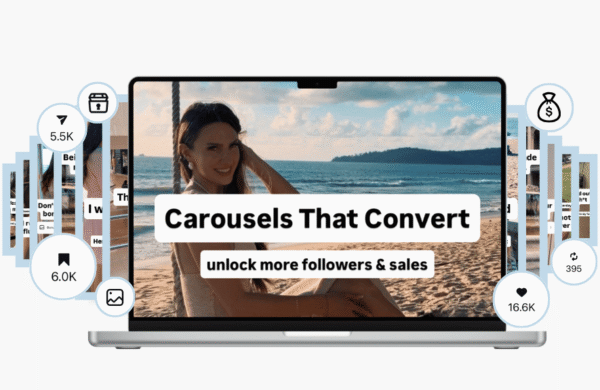
Maria Wendt – Carousels That Convert
$57.00 Original price was: $57.00.$20.00Current price is: $20.00.
- 24/7 Contact Support & Telegram - Ecomkevin_1
- You Can Request Any Courses
- Original Courses HD Qualite and links updated
Guaranteed Safe Checkout


Description
Maria Wendt – Carousels That Convert
Introduction
Maria Wendt – Carousels That Convert is a course for creators, entrepreneurs, marketers, and online business owners who want to improve their social media carousel content. Carousels can help communicate ideas, share useful information, and encourage people to engage with your posts. However, creating slides that look attractive is only one part of the process. The content must also capture attention, deliver value, and guide readers toward a clear next step.
If you want to make your social media content more purposeful, this course is worth exploring. It focuses on the idea behind conversion-oriented carousel content. Instead of publishing slides without a clear objective, you can learn to approach each carousel with a specific audience and message in mind.
Whether you create educational posts, promote a service, build a personal brand, or market digital products, carousel content can become a useful part of your content strategy.
Course Overview
Maria Wendt – Carousels That Convert is designed for people interested in creating more effective carousel-style social media content. A carousel typically presents information across multiple slides. This format allows creators to develop an idea step by step rather than relying on a single image or a lengthy caption.
For example, a carousel might explain a common problem, share practical advice, present a useful checklist, or introduce a product. Each slide contributes to the overall message. As a result, the post can be easier to follow and more engaging for the intended audience.
The central idea behind conversion-focused carousels is to connect content with a meaningful objective. Depending on your business, that objective could be generating interest, building trust, encouraging inquiries, or supporting a sale.
This approach is useful for businesses that want their content to do more than fill a posting schedule. Instead, each carousel can serve a clear purpose within a wider marketing plan.
Note: The exact curriculum, modules, bonuses, and course format have not been independently confirmed. This description focuses on the general skills associated with creating conversion-oriented carousels.
What You Can Expect to Learn
1. Creating Carousels With a Clear Purpose
Before designing slides, it helps to understand why you are creating the post. A carousel without a clear objective can feel unfocused. Therefore, start by identifying the result you want from the content.
For instance, an educational carousel may aim to explain a concept. A promotional carousel may introduce an offer. Meanwhile, a trust-building carousel may answer questions that potential customers often ask.
By defining the purpose first, you can make better decisions about the topic, structure, message, and call to action.
2. Understanding Your Target Audience
Effective content starts with the reader. You need to understand the questions, challenges, interests, and goals of the people you want to reach.
For example, a beginner may need a simple explanation, while an experienced business owner may prefer specific insights. Similarly, a potential customer may want to understand a problem before considering a product.
When you create content around real audience needs, your message becomes more relevant. Consequently, readers have a stronger reason to continue through the slides.
3. Writing Attention-Grabbing Openings
The opening slide plays an important role in a carousel. It introduces the topic and gives people a reason to keep reading.
A useful opening can highlight a common mistake, introduce a practical benefit, ask a relevant question, or promise a clear explanation. However, the headline should accurately reflect the content that follows.
Avoid exaggerated claims that the carousel cannot support. Instead, focus on a specific problem or useful outcome. This helps establish expectations and creates a natural connection between the headline and the rest of the post.
4. Organizing Content Across Multiple Slides
A carousel should feel like one connected message rather than a collection of unrelated statements. Each slide should contribute to the main idea.
You might begin by introducing a problem, explain why it matters, share practical steps, and finish with a summary or next action. This structure helps readers follow the information more easily.
Additionally, keep each slide focused on one main point. Short paragraphs and clear wording can make complex information easier to understand. When necessary, use examples to explain abstract ideas.
5. Improving Readability and Visual Consistency
Design influences how people experience your content. Even valuable information can be difficult to absorb when slides contain too much text or inconsistent formatting.
Use clear headings, readable typography, sufficient spacing, and a consistent visual style. Moreover, make sure the text remains legible on mobile screens, where many people consume social media content.
Visual consistency can also help your posts become recognizable over time. Nevertheless, attractive design should support the message rather than distract from it.
6. Communicating Value Before Promoting an Offer
People are more likely to pay attention when content addresses something relevant to them. Therefore, consider giving readers useful information before introducing a product or service.
For example, you could explain a common challenge, outline several possible solutions, or share a practical checklist. Once readers understand the topic, you can explain how your offer relates to their needs.
This approach allows promotion to feel connected to the content. It also helps businesses avoid making every post look like a direct advertisement.
7. Using Clear Calls to Action
A call to action tells readers what they can do next. Without one, people may finish reading without understanding how to continue the conversation.
Your next step should match the purpose of the carousel. You might invite readers to comment, save the post, visit a relevant page, send an inquiry, or explore a product.
However, avoid asking readers to complete too many actions at once. A single, relevant request is often easier to understand and follow.
8. Connecting Content With Business Goals
A carousel can support several stages of a marketing journey. Some posts introduce your brand to new people. Others help educate interested readers or address questions before a purchase.
For this reason, think about how each post fits into your broader content strategy. Educational posts can build awareness, while product-focused posts can explain an offer. Meanwhile, frequently asked questions can help reduce uncertainty.
The important point is to connect your content to a realistic objective. Likes and views can provide useful feedback, but they do not automatically translate into customers or revenue.
Who Is This Course Suitable For?
Maria Wendt – Carousels That Convert may be relevant to people who want to improve their approach to social media content.
It may be worth considering if you are:
- Content creators: Develop educational, informative, or entertaining carousel posts for your audience.
- Digital marketers: Explore ways to connect content creation with marketing objectives.
- Entrepreneurs and business owners: Explain your products, services, and expertise through structured posts.
- Coaches and consultants: Share insights and answer common questions in an accessible format.
- Freelancers and agencies: Create carousel content for your own brand or client projects.
- Personal brand builders: Communicate your expertise and develop a more consistent online presence.
- Digital product sellers: Introduce resources, explain their value, and direct interested readers toward relevant offers.
- Social media managers: Develop a repeatable approach to planning and producing carousel content.
Beginners may benefit from learning the basic principles of structured content. More experienced marketers may also find the topic relevant when reviewing their existing content process.
Key Benefits of Conversion-Focused Carousel Content
Make Your Message Easier to Understand
Breaking information into individual slides can help readers process one point at a time. As a result, you can explain ideas without placing everything in a single graphic or caption.
Build a More Consistent Content Strategy
Planning carousels around specific objectives gives your publishing process greater direction. You can develop recurring themes and create content that supports your broader marketing activities.
Communicate Your Expertise
Useful, well-organized posts provide an opportunity to demonstrate your knowledge. Over time, consistently helpful content can support your efforts to build credibility with an audience.
Present Products and Services More Clearly
Carousels can explain what a product does, who it is for, or which problem it addresses. This format gives you space to introduce information gradually instead of relying on a short promotional message.
Create Content for Different Business Needs
You can use carousel posts for tutorials, checklists, common mistakes, frequently asked questions, case-study summaries, product explanations, and educational content. Therefore, the format can fit several different content plans.
Encourage Meaningful Engagement
Relevant information and clear next steps can give readers a reason to interact with your posts. However, engagement depends on many factors, including content quality, audience relevance, distribution, and timing. No particular result is guaranteed.
Why Carousel Content Matters for Online Businesses
Social media is often an important channel for discovering brands and learning about their offers. Yet publishing frequently does not necessarily mean publishing effectively.
A planned carousel gives you an opportunity to communicate one idea in a structured way. It can help a reader recognize a problem, understand a possible solution, and decide whether to learn more.
For online businesses, this is especially relevant when customers need additional information before making a decision. A series of educational posts can address common concerns, explain product benefits, and make an offer easier to understand.
Furthermore, carousel content can be repurposed thoughtfully. A detailed article, customer question, tutorial, or checklist may provide the starting point for several related posts. Each version should still be adapted to its audience and platform.
The goal is not to turn every post into a sales pitch. Instead, create a useful balance between education, audience connection, and promotion.
How to Get the Most From Learning About Carousels
To apply the ideas behind conversion-oriented content, begin with a clear audience and a specific topic. Next, write the central message in one sentence. This will help you decide which details belong in the carousel and which can be removed.
Then, outline the slides before designing them. Make sure the opening introduces a relevant idea, the middle delivers useful information, and the ending provides a logical next step.
After publishing, review the available performance data. Depending on the platform, you may be able to examine reach, saves, shares, profile visits, link clicks, or inquiries. Choose metrics that match your original objective.
For example, a post designed to educate an audience may be judged differently from one intended to generate leads. By comparing similar posts over time, you can identify useful patterns and improve future content.
Finally, keep experimenting. Different audiences respond to different topics, writing styles, and formats. Consistent testing can help you discover what works for your particular business.
Frequently Asked Questions
What is Maria Wendt – Carousels That Convert?
Maria Wendt – Carousels That Convert is a course identified by this title and associated with creating conversion-oriented carousel content. Its exact curriculum and included resources should be checked against the current course materials.
What is a social media carousel?
A social media carousel is a post containing multiple images or slides that viewers can browse in sequence. It is commonly used to explain ideas, share tips, present tutorials, and communicate product information.
Who should consider learning about carousel content?
Content creators, entrepreneurs, digital marketers, coaches, freelancers, and social media managers may find carousel content useful. It can support educational posts, personal branding, audience engagement, and product promotion.
Can carousel posts help promote products or services?
Yes. A carousel can explain a problem, introduce a solution, answer common questions, and direct interested readers toward a relevant offer. However, results depend on the quality of the content, audience fit, offer, and overall marketing strategy.
Do I need design experience to create carousels?
Not necessarily. Basic design principles, readable typography, consistent formatting, and a clear message can help you create more accessible slides. The level of design experience required will depend on the tools and techniques you choose to use.
Does this course guarantee more sales or engagement?
No specific sales, engagement, or conversion results should be assumed. Performance depends on multiple factors, including audience demand, content quality, distribution, pricing, and the offer itself.
What should I verify before purchasing?
Check the current course listing for the confirmed curriculum, format, access arrangements, instructor information, and any included materials. These details can vary, so rely on the actual listing rather than assumptions.
Final Thoughts
Maria Wendt – Carousels That Convert is a relevant course topic for anyone looking to approach social media carousel content with greater purpose. Instead of focusing only on appearance or posting frequency, conversion-oriented content considers the audience, the message, the slide structure, and the intended next step.
For creators and businesses, these principles can help bring more direction to content planning. They can also support clearer communication, more useful educational posts, and a stronger connection between social media activity and business objectives.
If you want to explore ways to make your carousel content more strategic, this course may be worth considering. Review the available course details to confirm what is included, then decide whether it fits your experience level and marketing goals.
Reviews
There are no reviews yet.