
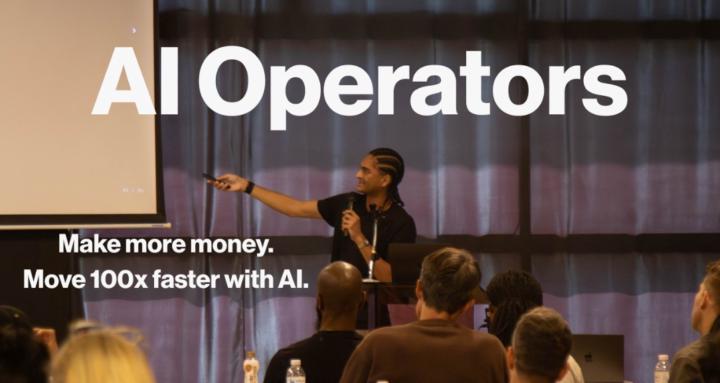
Johann Sathianathen – AI Operators (March 2026)
$49.00 Original price was: $49.00.$22.00Current price is: $22.00.
- 24/7 Contact Support & Telegram - Ecomkevin_1
- You Can Request Any Courses
- Original Courses HD Qualite and links updated
Guaranteed Safe Checkout


Description
Johann Sathianathen – AI Operators (Complete Guide)
Introduction
In today’s fast-evolving digital landscape, automation and artificial intelligence are transforming how businesses operate. One of the most powerful innovations in this space is the concept of AI operators—intelligent systems that can manage, automate, and optimize complex workflows with minimal human intervention.
Johann Sathianathen – AI Operators has become a highly searched topic among entrepreneurs, marketers, and tech enthusiasts who want to stay ahead of the curve. This guide explores everything you need to know—from fundamentals to real-world applications—so you can fully understand and leverage this powerful concept.
What Are AI Operators?
AI operators are advanced systems or tools designed to execute tasks autonomously using artificial intelligence. Unlike traditional automation tools, these operators can:
- Understand context
- Make decisions
- Learn from data
- Adapt to changing environments
Instead of simply following predefined rules, AI operators analyze situations and determine the best possible action.
Simple Example
Think of a virtual assistant that not only schedules meetings but also:
- Chooses the best time based on your habits
- Sends reminders automatically
- Adjusts scheduling conflicts intelligently
That’s the power of AI operators.
Who Is Johann Sathianathen?
Johann Sathianathen is associated with modern AI-driven workflow systems and operational automation strategies. His work focuses on helping individuals and businesses implement AI operators effectively to:
- Increase productivity
- Reduce manual workload
- Scale operations faster
The concept emphasizes practical implementation rather than just theory, making it valuable for real-world business growth.
Core Concept Behind AI Operators
The main idea behind AI operators is simple:
👉 Replace repetitive human tasks with intelligent automation
👉 Improve decision-making using data
👉 Allow humans to focus on high-value activities
Key Components
- Data Input
AI systems rely on structured and unstructured data. - Processing Engine
Algorithms analyze and interpret the data. - Decision Layer
The system determines the best action. - Execution
Tasks are completed automatically. - Learning Loop
The system improves over time.
Why AI Operators Are Important
AI operators are not just a trend—they are becoming essential for businesses.
1. Time Efficiency
Manual tasks that take hours can be completed in seconds.
2. Cost Reduction
Fewer resources are needed for repetitive work.
3. Scalability
Businesses can grow without increasing workforce proportionally.
4. Accuracy
AI reduces human errors in repetitive processes.
5. Competitive Advantage
Early adopters gain a strong market edge.
Real-World Applications
AI operators can be used in multiple industries. Here are some practical use cases:
1. Marketing Automation
- Content generation
- Email campaigns
- Ad optimization
2. Customer Support
- Chatbots
- Automated responses
- Ticket management
3. E-commerce
- Product recommendations
- Inventory management
- Order processing
4. Finance
- Fraud detection
- Expense tracking
- Financial forecasting
5. HR & Recruitment
- Resume screening
- Interview scheduling
- Employee onboarding
How AI Operators Work Step-by-Step
Understanding the workflow will help you implement them effectively.
Step 1: Data Collection
The system gathers data from multiple sources.
Step 2: Analysis
AI models analyze patterns and trends.
Step 3: Decision Making
The operator decides what action to take.
Step 4: Execution
The task is completed automatically.
Step 5: Feedback Loop
The system learns and improves over time.
Benefits for Entrepreneurs
If you’re running a business or planning to start one, AI operators can be a game changer.
Save Time
Automate repetitive tasks like emails, data entry, and scheduling.
Increase Revenue
Optimize marketing campaigns and customer engagement.
Better Decision Making
Use data-driven insights instead of guesswork.
24/7 Operation
AI works continuously without breaks.
Common Misconceptions
❌ AI Will Replace Humans Completely
✔ Reality: AI supports humans, not replaces them entirely.
❌ It’s Too Expensive
✔ Reality: Many tools are affordable and scalable.
❌ Only for Big Companies
✔ Reality: Small businesses benefit the most.
Challenges and Limitations
While powerful, AI operators also have some limitations:
1. Data Dependency
Poor data leads to poor results.
2. Initial Setup
Requires time and effort to implement.
3. Learning Curve
Users need basic understanding to maximize benefits.
4. Ethical Concerns
Privacy and data usage must be handled carefully.
How to Get Started
If you want to implement AI operators, follow this roadmap:
Step 1: Identify Repetitive Tasks
Look for tasks that consume time.
Step 2: Choose the Right Tools
Select AI platforms based on your needs.
Step 3: Start Small
Automate one process first.
Step 4: Monitor Results
Track performance and optimize.
Step 5: Scale Gradually
Expand automation across your business.
Future of AI Operators
The future looks extremely promising.
Trends to Watch
- Hyper-automation
- AI-driven decision systems
- Personalized automation
- Integration with IoT and real-time data
In the coming years, AI operators will become a standard part of every business.
Why This Topic Is Trending
The increasing demand for automation, combined with advancements in AI technology, has made this topic highly relevant.
People are actively searching for:
- Ways to earn more with less effort
- Automation strategies
- AI-powered business models
This is why Johann Sathianathen – AI Operators is gaining attention.
Final Thoughts
AI operators represent a major shift in how work is done. Instead of spending time on repetitive tasks, individuals and businesses can focus on creativity, strategy, and growth.
Whether you’re a beginner or an experienced entrepreneur, understanding and implementing AI operators can significantly improve your efficiency and results.
The key is to start small, learn continuously, and scale smartly.
Reviews
There are no reviews yet.