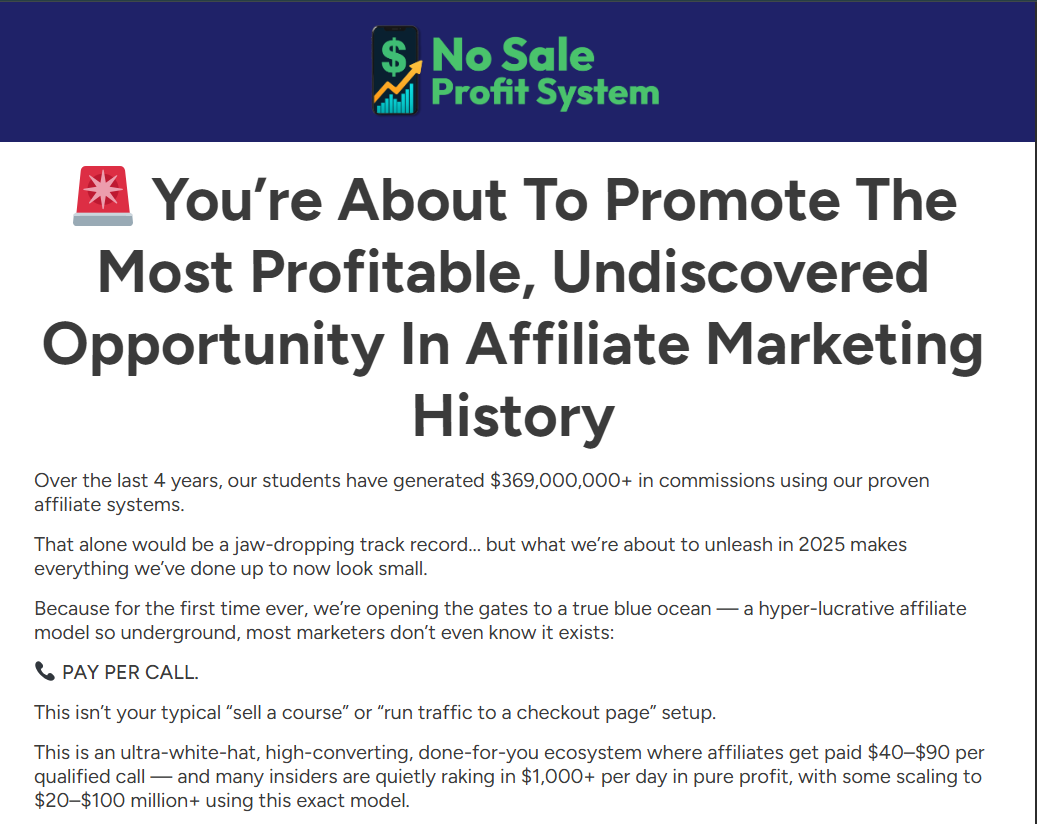
Chris Reader – No Sale Profit System
$2,997.00 Original price was: $2,997.00.$149.00Current price is: $149.00.
- 24/7 Contact Support & Telegram - Ecomkevin_1
- You Can Request Any Courses
- Original Courses HD Qualite and links updated
Guaranteed Safe Checkout

Description
Chris Reader – No Sale Profit System: A Deep Breakdown & Practical Guide
In the world of digital business, the biggest challenge beginners face is simple: selling is hard. Most people don’t have sales skills, don’t want to cold-call, and don’t like chasing customers. That’s exactly why the concept behind Chris Reader – No Sale Profit System has caught so much attention. It takes the pressure away from direct selling and shifts the focus toward systems, automation, and smart positioning.
This article breaks down the core idea behind the system, why it works, how beginners can apply similar principles, and what makes it different from traditional online business models. Whether you’re exploring new income streams or trying to build a simple, scalable method, this guide will help you understand the logic, structure, and real-world applications without any fluff.
1. Why “No Sale” Systems Are Growing Fast
The internet has changed how business works. Customers want convenience, brands want automation, and creators want income that doesn’t require them to show up every day. The rise of:
-
automated funnels
-
content-based marketing
-
affiliate systems
-
referral engines
-
digital products
-
and AI-driven support
has made it possible for someone to earn without becoming a full-time salesperson.
“No Sale” models are attractive because:
1. They remove rejection
Many beginners quit online business because hearing “no” repeatedly drains confidence. A system-based model eliminates that emotional pressure.
2. Automation does most of the heavy lifting
Lead generation, follow-ups, nurturing, education, and even conversions can be automated using tools.
3. They work even while you’re asleep
Once you set up onboarding, content flows, and automated delivery, your time involvement decreases massively.
4. They’re easier to scale
Scaling a business that depends on your personal selling ability is difficult. A system can be duplicated, expanded, or upgraded instantly.
2. Understanding System-Based Profits
To understand any “no sale” approach, you must first understand where the money actually comes from. There are three major profit pathways in such systems:
A. Platform-Driven Earnings
These include monetization methods that pay you without needing to sell to individuals:
-
ad revenue
-
referrals
-
commissions
-
traffic-based revenue
-
subscription payouts
Platforms reward you simply for bringing users, not for manually convincing them.
B. Value-First Content Monetization
Here, your content generates trust, and systems convert the audience automatically. Typical examples include:
-
content funnels
-
automated email sequences
-
lead magnets
-
pre-recorded workshops
-
landing pages with built-in conversion logic
The user never talks to you personally, yet the system handles the education and decision-making.
C. Leverage-Based Digital Assets
These are things you create once but sell repeatedly:
-
templates
-
guides
-
setups
-
digital packs
-
short toolkits
-
membership access
-
optimized workflows
Digital assets don’t require personal selling; they sell because they solve immediate problems.
3. The Core Idea Behind the “No Sale” Methodology
This is not magic. It’s simply a smart combination of:
1. Automation
Set up once → the system repeats the process forever.
2. Positioning
People buy when they feel the solution is clearly designed for them.
3. Authority
Not celebrity status—just having something valuable, clear, and useful.
4. Pre-Selling through content
The user understands the value before they reach the offer.
5. Simplified offer structure
No confusing pages. No complicated upsells. Just a clean, easily understood pathway.
6. Leveraging social platforms
Short content + automated link systems = continuous traffic.
Together, they create an ecosystem where the system sells, not you.
4. How Beginners Can Apply These Principles (Step-By-Step)
You don’t need advanced tech. You don’t need a huge following. What you need is a simple path:
Step 1: Choose a Clear Problem to Solve
People buy solutions. Not ideas.
A clear problem could be:
-
starting a side income
-
fitness shortcuts
-
small business help
-
social media growth
-
personal organization
-
money management
-
relationship improvement
-
mindset tools
The problem must be specific enough that the audience says:
“YES, this is for me.”
Step 2: Build a Simple Digital Asset
This can be:
-
a PDF
-
a toolkit
-
a checklist
-
a mini training
-
a swipe file
-
a guide
-
a blueprint
-
a starter template
Keep it small, practical, and result-oriented.
Step 3: Create the Automation Flow
You need only three elements:
A. A landing page
This page explains the problem and the promise.
B. An email sequence
A short automated series:
-
Welcome
-
Value explanation
-
Solution presentation
-
Social proof
-
CTA
C. Delivery system
The user receives the product automatically.
Everything works on autopilot.
Step 4: Set Up the Pre-Selling Content Engine
This is where traffic comes from. Pick one or two platforms:
-
Instagram
-
YouTube
-
TikTok
-
X (Twitter)
-
Facebook
-
Pinterest
-
LinkedIn
-
Reddit
Your content should do one thing: warm people up with value.
Examples of content types that pre-sell without “selling”:
-
before-after scenarios
-
fast problem breakdowns
-
myth vs fact posts
-
short demonstrations
-
quick tips
-
framed logic concepts
-
relatable stories
The content brings the audience → the system converts them.
Step 5: Insert a Seamless Call-to-Action
Instead of “Buy now,” use soft CTAs:
-
“Check this out”
-
“Learn more”
-
“This might help you”
-
“Free resource inside”
-
“Join the toolkit”
Soft CTAs work extremely well for no-sale systems.
Step 6: Let the System Run & Improve Weekly
You don’t need daily changes.
Weekly improvements include:
-
adding new emails
-
adjusting the landing page text
-
improving content quality
-
testing new hooks
-
tracking which content brings traffic
-
adding a second digital asset later
Small consistent adjustments compound over time.
5. What Makes This Model Beginner-Friendly
Low cost
You don’t need fancy tools. Free or cheap tools work well.
No sales pressure
You never have to chase or convince anyone.
Works with small audiences
Even 300–500 engaged followers can generate solid results.
Can be done part-time
A few hours a week is enough once the setup is complete.
Scalable without burnout
Since the system does the heavy lifting, your personal effort stays the same.
6. Who Benefits the Most From This Approach?
This method works especially well for:
-
students who want extra income
-
people doing 9-to-5 jobs
-
introverts
-
creators with small audiences
-
digital marketers
-
beginners who hate selling
-
coaches who want to automate
-
freelancers who want passive income
-
anyone wanting to escape client-chasing
If you prefer structured, calm, predictable growth instead of high-pressure conversations, this model is ideal.
7. Real-World Examples of “No Sale” Systems in Action
Here are a few practical ways people use such systems today:
A. Selling Templates on Autopilot
Creators upload templates on platforms like Gumroad or their own site. Traffic comes from content. No direct selling.
B. Automated Mini-Courses
A 45-minute pre-recorded workshop explains a problem. Viewers can purchase a resource without any live interaction.
C. Affiliate Funnels
You create a simple guide → guide leads to a recommended tool → the system handles conversions → you earn commissions.
D. Notion or Canva Tools
Many creators build productivity tools and sell them automatically. Customers find them through content and search.
E. Subscription Communities
A simple private community where the introduction, onboarding, and value delivery are automated.
None of these require selling. The system does the convincing.
8. Why This Model Works Better Than Traditional Selling
1. People trust systems more than individuals
Automated explanations feel neutral and objective.
2. You can scale instantly
You don’t need more time — the system duplicates itself instantly.
3. It works with global audiences
People from any time zone can join because everything is automated.
4. You avoid burnout
No constant social pressure, no pitching, no phone calls.
9. Final Thoughts: Why This Business Style Is the Future
The online world is getting faster, more competitive, and more automated. People don’t want long phone calls. They want clarity, simplicity, and instant access to solutions. A properly designed system offers all three.
If you combine:
-
a valuable digital asset
-
consistent educational content
-
automated delivery
-
clear positioning
-
soft CTAs
you can build a business that works silently in the background. It becomes a predictable machine: audience → value → trust → conversion.
This approach is not just trending — it’s becoming a standard. And that’s why systems like this attract both beginners and experienced entrepreneurs looking for efficiency and minimal effort.
Reviews
There are no reviews yet.