
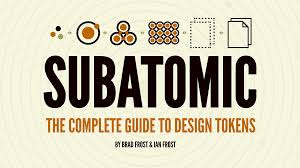
Brad Frost – Subatomic The Complete Guide To Design Tokens
$900.00 Original price was: $900.00.$45.00Current price is: $45.00.
- 24/7 Contact Support & Telegram - Ecomkevin_1
- You Can Request Any Courses
- Original Courses HD Qualite and links updated
Guaranteed Safe Checkout


Description
Brad Frost – Subatomic The Complete Guide To Design Tokens
Introduction
Modern digital products require consistency, scalability, and efficiency across multiple platforms. As organizations expand their design systems, maintaining visual harmony becomes increasingly challenging. This is where design tokens have emerged as one of the most important foundations of modern interface development.
Brad Frost – Subatomic The Complete Guide To Design Tokens is a comprehensive educational resource designed to help designers, developers, product teams, and design system specialists understand how to create, manage, and implement design tokens effectively. The course explores the methodologies, workflows, and best practices needed to establish a scalable token architecture that supports long-term product growth.
Whether you’re building a new design system from scratch or improving an existing one, understanding design tokens can dramatically improve collaboration between design and development teams while ensuring consistency across every digital experience.
What Are Design Tokens?
Design tokens are the smallest visual design decisions stored as reusable variables. They act as a single source of truth for design properties such as:
- Colors
- Typography
- Spacing
- Border Radius
- Shadows
- Opacity
- Motion Values
- Breakpoints
- Z-Index Layers
Instead of manually defining values across multiple applications and platforms, teams can centralize these decisions into tokens that can be updated and distributed efficiently.
For example, rather than hardcoding a specific blue color throughout a product, teams can define a token such as:
Primary Color = #0066FFWhenever the brand color changes, updating the token automatically updates every component that references it.
This approach significantly reduces maintenance overhead while improving consistency.
Why Design Tokens Matter
As digital ecosystems become more complex, maintaining consistency across websites, mobile applications, dashboards, and internal tools becomes difficult.
Design tokens solve several common challenges:
Consistency Across Products
Tokens ensure that every product uses the same visual language. Colors, spacing, and typography remain aligned regardless of platform.
Faster Scaling
Organizations can expand their design systems without repeatedly defining the same design decisions.
Improved Collaboration
Designers and developers work from the same source of truth, reducing misunderstandings and implementation errors.
Easier Brand Updates
Global visual changes become significantly easier when values are controlled through tokens.
Multi-Platform Support
Tokens can be transformed into formats suitable for:
- CSS
- SCSS
- JavaScript
- React
- React Native
- Flutter
- Android
- iOS
This enables consistent experiences across every platform.
Understanding the Subatomic Approach
The course introduces a practical framework for thinking about design tokens beyond simple variables.
The Subatomic methodology focuses on creating meaningful relationships between design decisions and implementation layers.
Instead of treating tokens as isolated values, teams learn how to build structured systems that support:
- Scalability
- Maintainability
- Flexibility
- Accessibility
- Theming
- Future Growth
This structured approach helps organizations avoid common pitfalls that emerge as design systems mature.
Core Concepts Covered
Foundational Tokens
Foundational tokens represent raw design values.
Examples include:
- Base colors
- Font sizes
- Font families
- Spacing units
- Elevation levels
These values serve as the building blocks for higher-level design decisions.
Example
Blue-500
Gray-100
Spacing-4
Font-Size-16
Foundational tokens provide consistency while maintaining flexibility.
Semantic Tokens
Semantic tokens create meaningful relationships between raw values and their intended use.
Instead of referencing:
Blue-500Teams reference:
Button-Primary-BackgroundThis abstraction makes systems easier to maintain and understand.
Benefits include:
- Improved readability
- Better scalability
- Easier rebranding
- Simplified maintenance
Component Tokens
Component-specific tokens define values for individual interface elements.
Examples:
- Button Padding
- Button Border Radius
- Card Shadow
- Input Border Color
These tokens allow teams to customize components while maintaining alignment with the broader design system.
Building a Scalable Token Architecture
One of the biggest strengths of the course is its focus on architecture.
Many organizations begin with simple variables but eventually struggle with:
- Naming conflicts
- Redundant values
- Inconsistent structures
- Poor documentation
A scalable architecture addresses these issues by establishing:
Naming Conventions
Consistent naming improves discoverability and maintenance.
Examples include:
color.primary.default
color.primary.hover
space.small
space.medium
space.large
Clear naming enables teams to understand token purpose immediately.
Hierarchical Organization
Tokens should be structured logically.
Typical hierarchy:
Foundation Layer
Raw values.
Semantic Layer
Meaningful usage assignments.
Component Layer
Specific UI implementations.
This layered structure creates flexibility while reducing duplication.
Design Tokens and Design Systems
Design systems depend on consistency.
Without tokens, maintaining consistency across hundreds of components becomes nearly impossible.
Tokens provide the foundation for:
- UI Components
- Pattern Libraries
- Brand Systems
- Product Ecosystems
A well-structured token system enables design systems to evolve efficiently while maintaining visual integrity.
Token Management Workflows
Effective token management requires more than simply defining values.
Teams must establish workflows that support:
Creation
New tokens should follow established standards and naming conventions.
Documentation
Every token should have clear documentation explaining:
- Purpose
- Usage
- Dependencies
Governance
Organizations need approval processes to prevent uncontrolled growth.
Distribution
Tokens should be automatically distributed to development environments whenever updates occur.
Automation and Tooling
Modern token workflows rely heavily on automation.
Automation helps organizations:
- Reduce manual work
- Minimize errors
- Increase consistency
- Speed up deployment
Popular workflows often involve:
Design Tools
Creating and managing token definitions.
Token Transformation Tools
Converting token values into platform-specific formats.
Continuous Integration
Automatically distributing updates to products and repositories.
Automation becomes increasingly valuable as systems grow in complexity.
Multi-Theme Support
Many organizations support multiple themes.
Examples include:
- Light Mode
- Dark Mode
- High Contrast Mode
- Brand Variations
Design tokens simplify theme management by separating visual values from implementation details.
Instead of rebuilding interfaces, teams can swap token values based on the active theme.
Benefits include:
- Faster development
- Improved accessibility
- Better user experiences
- Easier maintenance
Accessibility Considerations
Accessibility should be integrated into every design system.
Tokens can help enforce accessibility standards by defining approved values for:
Color Contrast
Ensuring sufficient contrast between text and backgrounds.
Typography
Maintaining readable text sizes and line heights.
Focus States
Creating visible focus indicators for keyboard users.
Motion
Providing accessible animation and transition settings.
Embedding accessibility into token systems helps organizations maintain compliance while improving usability.
Developer Implementation Strategies
The course also explores practical implementation techniques.
Developers learn how to integrate tokens into:
CSS Variables
--color-primary: #0066FF;JavaScript
const primaryColor = tokens.color.primary;Component Libraries
Reusable components consume token values rather than hardcoded styles.
This approach improves maintainability and reduces technical debt.
Common Mistakes Teams Make
Many organizations encounter challenges when implementing design tokens.
Common mistakes include:
Poor Naming Structures
Confusing names make tokens difficult to understand.
Over-Engineering
Creating excessive layers can increase complexity.
Lack of Governance
Without governance, token libraries become difficult to manage.
Missing Documentation
Undocumented tokens create confusion for designers and developers.
Hardcoded Values
Bypassing tokens undermines consistency.
Understanding these pitfalls helps teams build more sustainable systems.
Benefits for Designers
Designers gain several advantages from a mature token system.
Faster Design Work
Reusable values eliminate repetitive tasks.
Better Consistency
Interfaces remain visually aligned across products.
Improved Collaboration
Communication with developers becomes more effective.
Easier Maintenance
Global updates require significantly less effort.
Benefits for Developers
Developers also benefit substantially.
Reduced Repetition
Styles can be reused across applications.
Faster Development
Teams spend less time managing visual inconsistencies.
Improved Code Quality
Centralized values reduce duplication.
Easier Refactoring
Large-scale updates become significantly simpler.
Benefits for Organizations
Organizations investing in design tokens often experience:
- Faster product development
- Stronger brand consistency
- Lower maintenance costs
- Better cross-team collaboration
- Improved scalability
- Higher design system adoption
These advantages become increasingly valuable as digital ecosystems grow.
Who Should Learn Design Tokens?
This training is valuable for:
UI Designers
Create more scalable and maintainable design systems.
UX Designers
Understand how design decisions translate into implementation.
Front-End Developers
Build consistent interfaces across platforms.
Design System Managers
Establish governance and scaling strategies.
Product Teams
Improve collaboration between design and engineering.
Enterprise Organizations
Manage large-scale digital ecosystems more effectively.
Final Thoughts
Design tokens have become a critical component of modern product development. Organizations that invest in structured token systems gain significant advantages in consistency, scalability, and efficiency.
Brad Frost – Subatomic The Complete Guide To Design Tokens provides a detailed roadmap for understanding token architecture, implementation workflows, governance strategies, accessibility considerations, and long-term design system scalability. By learning these principles, teams can create more resilient digital products while reducing maintenance overhead and improving collaboration across disciplines.
For professionals working with design systems, front-end development, or product design, mastering design tokens is no longer optional—it is an essential skill for building modern, scalable digital experiences.
Reviews
There are no reviews yet.