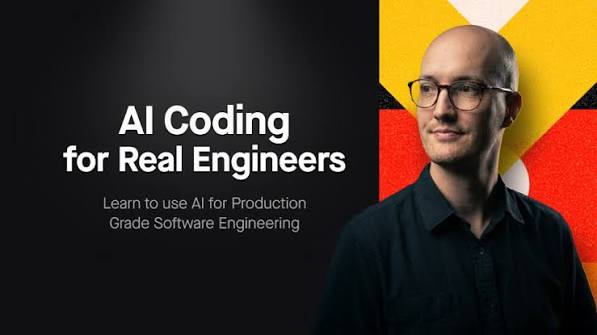
Matt Pocock – AI Coding for Real Engineers (June 1 – June 12, 2026)
$497.00 Original price was: $497.00.$49.00Current price is: $49.00.
- 24/7 Contact Support & Telegram - Ecomkevin_1
- You Can Request Any Courses
- Original Courses HD Qualite and links updated
Guaranteed Safe Checkout


Description
Matt Pocock – AI Coding for Real Engineers: Complete Course Overview
Artificial Intelligence is rapidly transforming software development, helping engineers write code faster, reduce repetitive tasks, improve debugging efficiency, and streamline entire development workflows. However, many developers struggle to move beyond basic AI prompts and unlock the true potential of modern AI coding tools. This is where Matt Pocock – AI Coding for Real Engineers stands out as a practical and comprehensive learning experience designed specifically for professional developers.
Unlike generic AI tutorials that focus on simple chatbot interactions, this training program teaches engineers how to integrate AI directly into their daily coding workflow. The course focuses on real-world development scenarios, advanced prompting strategies, debugging techniques, code generation best practices, architecture planning, testing automation, and productivity optimization.
Whether you’re a frontend developer, backend engineer, full-stack programmer, freelancer, startup founder, or enterprise software engineer, this course provides actionable methods for leveraging AI while maintaining high coding standards and professional software quality.
Why AI Is Changing Software Engineering
The software industry is experiencing one of the biggest transformations in its history. AI-powered coding assistants are no longer experimental tools; they have become essential productivity enhancers for modern development teams.
Today’s engineers use AI for:
- Code generation
- Bug fixing
- Documentation creation
- Refactoring projects
- Test generation
- Architecture planning
- API integration
- Database design
- Learning new frameworks
- Performance optimization
However, simply asking AI to write code often produces inconsistent results. Professional developers need structured workflows that combine engineering expertise with AI capabilities.
This course addresses that challenge by teaching developers how to become effective AI-assisted engineers rather than relying blindly on automated outputs.
What Makes This Course Different
Many AI coding courses focus solely on tool demonstrations. In contrast, this training emphasizes practical engineering applications and production-level workflows.
Key differentiators include:
Real Engineering Scenarios
Students learn through practical development challenges rather than theoretical examples. The course demonstrates how AI can support actual software projects from planning through deployment.
Workflow Optimization
Instead of teaching isolated prompts, the training focuses on building repeatable workflows that save time and increase development efficiency.
Professional Coding Standards
The course emphasizes maintaining clean architecture, readable code, testing practices, and engineering discipline while utilizing AI tools.
Modern Development Environment
Students learn techniques compatible with today’s most popular development ecosystems and coding assistants.
Core Topics Covered
AI-Assisted Code Generation
One of the biggest advantages of modern AI tools is accelerated code creation. The course teaches developers how to generate high-quality code while minimizing errors and technical debt.
Topics include:
- Effective prompting strategies
- Context management
- Generating reusable components
- Writing scalable functions
- Creating APIs
- Building utilities
- Framework-specific development
- Improving generated outputs
Students discover how to guide AI systems toward producing production-ready code rather than incomplete prototypes.
Advanced Debugging Techniques
Debugging remains one of the most time-consuming tasks in software development.
The training explores how AI can assist in:
- Error diagnosis
- Stack trace analysis
- Performance bottlenecks
- Runtime issues
- Dependency conflicts
- Framework-specific bugs
- Code review assistance
Engineers learn how to provide AI with the right context to quickly identify and resolve issues that might otherwise consume hours of manual investigation.
TypeScript Development Workflows
Matt Pocock is widely recognized for his expertise in TypeScript, making this aspect particularly valuable for modern developers.
Key areas include:
- Type inference optimization
- Generic functions
- Utility types
- Complex type systems
- Type-safe architectures
- Type debugging
- Refactoring TypeScript applications
- AI-assisted type generation
Developers gain practical methods for handling advanced TypeScript challenges using AI-driven workflows.
Project Planning and Architecture
Many developers underestimate AI’s ability to assist during the planning stage.
The course demonstrates how AI can help:
- Design project structures
- Plan software architecture
- Define system requirements
- Create implementation roadmaps
- Organize features
- Generate technical documentation
- Improve maintainability
These techniques help teams establish stronger foundations before writing code.
AI Tools and Modern Development
Software engineering is becoming increasingly integrated with intelligent development assistants.
Students learn strategies for working with:
- AI coding assistants
- Large language models
- Code completion systems
- Automated documentation tools
- Intelligent debugging platforms
- Workflow automation solutions
The focus remains on understanding how to maximize productivity while maintaining engineering control over the development process.
Productivity Systems for Engineers
One of the most valuable aspects of the course is learning how to increase output without sacrificing quality.
Developers discover:
Faster Development Cycles
Reduce implementation time through structured AI workflows.
Improved Research Efficiency
Quickly understand unfamiliar technologies, libraries, and frameworks.
Enhanced Documentation
Generate comprehensive project documentation with minimal manual effort.
Better Code Reviews
Use AI to identify potential issues before deployment.
Accelerated Learning
Understand new programming concepts significantly faster than traditional research methods.
Building Better Prompts for Developers
Prompt engineering has become an essential skill for software engineers.
The course teaches:
- Context-rich prompts
- Multi-step prompting
- Debugging prompts
- Refactoring prompts
- Testing prompts
- Architecture prompts
- Documentation prompts
- Workflow automation prompts
Students learn how prompt quality directly impacts AI-generated code quality.
AI-Powered Testing Strategies
Software testing remains critical regardless of how code is generated.
The course covers:
Unit Testing
Learn how AI can assist in creating reliable unit tests for functions, modules, and applications.
Integration Testing
Generate test scenarios that validate interactions between system components.
Edge Case Detection
Identify uncommon conditions that may introduce bugs into production systems.
Test Automation
Accelerate test creation and maintenance using AI-driven workflows.
These techniques help developers maintain confidence in their codebase while increasing development speed.
Refactoring Existing Applications
Legacy systems often present unique challenges.
Students learn how AI can assist with:
- Code modernization
- Dependency upgrades
- Architecture improvements
- Performance enhancements
- Technical debt reduction
- Framework migrations
- Documentation updates
This makes the course particularly valuable for engineers working with mature production applications.
Learning New Technologies Faster
Modern developers constantly face evolving frameworks and programming languages.
The course demonstrates how AI can accelerate learning by helping engineers:
- Understand unfamiliar codebases
- Learn new libraries
- Analyze documentation
- Generate implementation examples
- Compare frameworks
- Evaluate technical approaches
This capability significantly shortens the learning curve associated with modern software development.
Benefits for Professional Developers
After completing the training, students can expect improvements in several critical areas:
Increased Productivity
Complete development tasks faster without sacrificing quality.
Better Problem Solving
Leverage AI to explore solutions and overcome technical roadblocks.
Stronger Development Workflows
Create repeatable systems that scale across projects.
Enhanced Technical Knowledge
Gain a deeper understanding of modern AI-assisted engineering practices.
Competitive Advantage
Stay ahead of industry trends by mastering emerging development technologies.
Who Should Enroll?
This course is ideal for:
- Frontend developers
- Backend engineers
- Full-stack developers
- TypeScript programmers
- JavaScript developers
- Software architects
- Technical leads
- Freelancers
- Startup founders
- Development consultants
- Engineering managers
- Computer science students
Whether you’re building personal projects or managing enterprise software systems, the lessons can be applied immediately.
Practical Applications
The techniques taught can be used for:
- Web application development
- SaaS platforms
- Enterprise software
- API development
- Internal tools
- E-commerce systems
- Automation projects
- Mobile applications
- Cloud-based solutions
- Developer tooling
Because the concepts focus on workflows rather than specific technologies, they remain valuable across multiple programming environments.
The Future of AI-Assisted Engineering
The role of software engineers is evolving. AI is not replacing developers; instead, it is enhancing their capabilities and allowing them to focus on higher-value tasks.
Engineers who learn how to effectively collaborate with AI tools gain significant advantages in:
- Development speed
- Code quality
- Problem solving
- Technical research
- Project delivery
- Career growth
The future belongs to developers who can combine engineering expertise with intelligent automation.
Final Thoughts
Matt Pocock – AI Coding for Real Engineers provides a practical roadmap for developers seeking to integrate AI into professional software development workflows. Rather than promoting shortcuts or low-quality automation, the course focuses on helping engineers build smarter systems, write better code, improve debugging processes, and increase productivity while maintaining professional standards.
For developers who want to stay competitive in the rapidly changing software industry, mastering AI-assisted engineering techniques is becoming increasingly important. This training offers a structured approach to understanding how modern AI tools can support real-world development projects while preserving the critical thinking and technical judgment that define great engineers.
Reviews
There are no reviews yet.