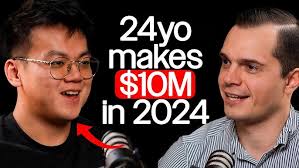
Zhihao Huang – How To Write Direct Response Copy
$39.00 Original price was: $39.00.$15.00Current price is: $15.00.
- 24/7 Contact Support & Telegram - Ecomkevin_1
- You Can Request Any Courses
- Original Courses HD Qualite and links updated
Guaranteed Safe Checkout


Description
Zhihao Huang – How To Write Direct Response Copy
Direct response copywriting is one of the most valuable skills in modern marketing. Unlike traditional branding content, direct response copy is designed to generate an immediate action from the reader. Whether the goal is to make a sale, collect leads, schedule appointments, or increase conversions, effective copywriting can significantly impact business growth.
Learning how to write persuasive sales copy requires understanding consumer psychology, marketing fundamentals, and proven copywriting frameworks. The methods taught in this training focus on creating compelling messages that connect with audiences, overcome objections, and encourage action.
This comprehensive guide explores the essential principles, strategies, and techniques that help writers create high-converting direct response copy across various platforms.
What Is Direct Response Copywriting?
Direct response copywriting is a form of marketing communication specifically designed to prompt an immediate response from readers. Instead of simply informing or entertaining, it encourages prospects to take a specific action such as:
- Purchasing a product
- Signing up for a newsletter
- Booking a consultation
- Requesting a demo
- Downloading a resource
- Filling out a lead form
The effectiveness of direct response marketing can be measured through conversions, click-through rates, sales, and return on investment.
Unlike brand advertising that focuses on awareness, direct response copy delivers measurable results and clear performance metrics.
Why Direct Response Copy Matters
Businesses invest heavily in advertising and marketing campaigns. However, without persuasive copy, even the best products may struggle to generate sales.
Strong copy can:
Increase Conversion Rates
Well-written sales messages persuade readers to take action and reduce friction in the buying process.
Improve Marketing ROI
Better copy improves campaign performance, allowing businesses to generate more revenue from existing traffic.
Build Customer Trust
Effective copy demonstrates understanding of customer pain points and positions solutions clearly.
Create Competitive Advantage
Companies with superior messaging often outperform competitors even when offering similar products or services.
Understanding Customer Psychology
Before writing any sales copy, understanding the target audience is essential.
Successful copywriters spend significant time researching:
- Customer frustrations
- Desired outcomes
- Emotional triggers
- Buying motivations
- Common objections
- Industry terminology
The most persuasive copy often mirrors the language customers already use when describing their problems.
When readers feel understood, they become more receptive to marketing messages.
The Foundation of High-Converting Copy
Every successful direct response campaign starts with a strong foundation.
Identify the Core Problem
People buy solutions, not products.
Instead of focusing solely on features, effective copy addresses the primary challenge customers face.
For example:
Poor Approach:
“Our software includes advanced automation features.”
Better Approach:
“Stop wasting hours on repetitive tasks and automate your workflow in minutes.”
The second example focuses on the customer’s pain point rather than technical specifications.
Define the Desired Outcome
Customers are motivated by transformation.
They want:
- Better health
- More income
- Increased productivity
- Greater confidence
- Business growth
- Time freedom
Copy should clearly illustrate the result prospects can expect after using the product or service.
The Importance of Headlines
Headlines are often responsible for determining whether readers continue reading.
A strong headline should:
- Capture attention
- Spark curiosity
- Highlight benefits
- Create relevance
- Address a pain point
Examples include:
Benefit-Focused Headline
Learn How To Increase Conversions Without Increasing Ad Spend
Curiosity-Based Headline
The Copywriting Formula Responsible for Millions in Online Sales
Problem-Solving Headline
Why Most Marketing Campaigns Fail and How to Fix Them
Testing multiple headlines often leads to significant improvements in campaign performance.
Crafting an Effective Hook
After the headline, the opening section must keep readers engaged.
A powerful hook can:
- Introduce a surprising fact
- Share a compelling story
- Present a shocking statistic
- Challenge conventional beliefs
- Highlight a common problem
The goal is to create enough interest that readers continue through the sales message.
Without engagement, even the best offer may go unnoticed.
Writing Benefit-Driven Copy
One of the biggest mistakes beginners make is focusing too much on features.
Features describe what a product has.
Benefits explain why those features matter.
Feature
AI-powered marketing automation.
Benefit
Save hours each week while generating more qualified leads automatically.
Customers care far more about outcomes than technical specifications.
Whenever mentioning a feature, connect it directly to a meaningful benefit.
Using Emotional Triggers
Purchasing decisions are largely emotional.
While people justify purchases logically, emotions often drive the initial decision.
Common emotional triggers include:
Fear
Fear of missing opportunities, losing money, or falling behind competitors.
Desire
The aspiration for success, wealth, recognition, or achievement.
Security
The need for stability, confidence, and reliability.
Belonging
The desire to fit into a group or community.
Achievement
The satisfaction of accomplishing goals and reaching milestones.
Incorporating emotional elements makes copy more persuasive and memorable.
Building Credibility and Trust
Trust is critical in direct response marketing.
Prospects are naturally skeptical and often question marketing claims.
Effective ways to establish credibility include:
Testimonials
Real customer experiences demonstrate proven results.
Case Studies
Detailed examples provide evidence of success.
Statistics
Data strengthens claims and increases trustworthiness.
Authority
Highlighting expertise, experience, and achievements builds confidence.
Social Proof
Showing widespread adoption reduces perceived risk.
The stronger the trust, the easier it becomes to convert prospects into customers.
Overcoming Objections
Every prospect has objections.
Common concerns include:
- Price
- Time commitment
- Complexity
- Risk
- Credibility
- Previous bad experiences
Strong sales copy proactively addresses these concerns.
For example:
“If you’re worried about having no prior experience, the step-by-step training system walks you through every stage from beginner to advanced implementation.”
Addressing objections before they arise reduces resistance.
The Power of Storytelling
Stories create emotional engagement and improve retention.
A compelling story often follows this structure:
The Struggle
Present a challenge or obstacle.
The Discovery
Introduce a solution or breakthrough.
The Transformation
Show the positive result achieved.
Stories help readers visualize their own success and make marketing messages feel more authentic.
Creating Irresistible Offers
Even exceptional copy cannot compensate for a weak offer.
An attractive offer should provide:
Clear Value
Customers must perceive benefits that exceed the cost.
Specific Outcomes
Clearly define what buyers will achieve.
Bonuses
Additional resources increase perceived value.
Guarantees
Risk reduction improves buyer confidence.
Scarcity
Limited availability can encourage action.
The combination of strong copy and a compelling offer often determines campaign success.
Writing Effective Calls to Action
Every sales message should guide readers toward a specific action.
Effective calls to action are:
- Clear
- Direct
- Action-oriented
- Benefit-focused
Examples include:
- Start Your Free Trial Today
- Download the Complete Guide
- Book Your Strategy Session
- Get Instant Access Now
- Claim Your Spot Before Enrollment Closes
Avoid vague instructions that create confusion.
The next step should always be obvious.
Direct Response Copywriting Frameworks
Several proven frameworks help structure persuasive copy.
AIDA Framework
Attention
Capture interest immediately.
Interest
Build curiosity and engagement.
Desire
Create emotional motivation.
Action
Prompt the desired response.
PAS Framework
Problem
Identify the issue.
Agitate
Highlight consequences and frustrations.
Solution
Present the answer.
PAS remains one of the most effective structures for sales copy.
Before-After-Bridge Framework
Before
Describe the current situation.
After
Illustrate the desired future.
Bridge
Explain how to get there.
This framework works exceptionally well for landing pages and advertisements.
Optimizing Copy for Different Platforms
Direct response copy appears across many channels.
Sales Pages
Require detailed explanations, proof, and objection handling.
Email Marketing
Focus on engagement, personalization, and click-through rates.
Social Media Ads
Need concise messaging and strong hooks.
Landing Pages
Prioritize clarity and conversion optimization.
Video Sales Letters
Combine persuasive scripts with visual storytelling.
Each platform requires slight adjustments while maintaining persuasive fundamentals.
Common Copywriting Mistakes
Many marketers make avoidable errors.
Writing Without Research
Poor audience understanding leads to weak messaging.
Focusing on Features
Benefits drive purchasing decisions.
Weak Headlines
Low engagement reduces conversion opportunities.
Ignoring Objections
Unanswered concerns create resistance.
Lack of Clear CTA
Confused prospects rarely convert.
Avoiding these mistakes significantly improves copy performance.
Developing Copywriting Skills
Mastering direct response copywriting requires consistent practice.
Recommended activities include:
- Analyzing successful sales pages
- Rewriting advertisements
- Studying customer reviews
- Practicing headline creation
- Testing different copy variations
- Learning consumer psychology
The best copywriters continually refine their skills through real-world experience and testing.
Final Thoughts
Direct response copywriting remains one of the most profitable skills in digital marketing. By understanding customer psychology, crafting compelling offers, building trust, and using proven persuasion frameworks, marketers can dramatically improve conversion rates and business results.
The principles covered in Zhihao Huang – How To Write Direct Response Copy provide a structured approach to creating persuasive marketing messages that drive measurable outcomes. Whether writing sales pages, email campaigns, advertisements, or landing pages, mastering these techniques can help businesses attract more customers and generate sustainable growth.
Success in copywriting comes from combining research, strategy, psychology, and continuous optimization. The more effectively a message resonates with the audience, the more likely it is to produce meaningful results.
Reviews
There are no reviews yet.