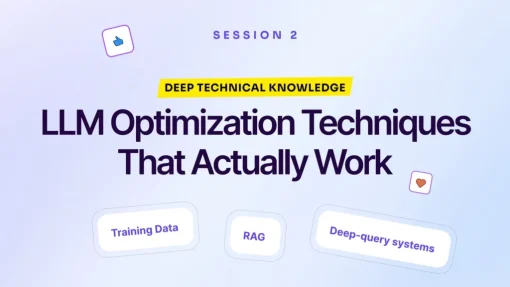
Kristina Azarenko – SEO For LLMs The GEO Blueprint
$97.00 Original price was: $97.00.$25.00Current price is: $25.00.
- 24/7 Contact Support & Telegram - Ecomkevin_1
- You Can Request Any Courses
- Original Courses HD Qualite and links updated
Guaranteed Safe Checkout


Description
Introduction: The Future of Search Has Changed
Search is no longer limited to traditional search engines. With the rapid rise of AI systems like ChatGPT, Google’s AI Overviews, and other large language models (LLMs), the way people discover information is transforming dramatically. Instead of clicking through ten blue links, users now receive synthesized answers generated by AI.
This shift has created a new optimization layer called Generative Engine Optimization (GEO). And one of the leading educators helping marketers adapt to this evolution is Kristina Azarenko – SEO For LLMs The GEO Blueprint.
This program is not just another SEO course. It is a structured framework designed to help marketers, business owners, and SEO professionals understand how AI systems interpret, select, and surface content.
If traditional SEO was about ranking on page one, GEO is about becoming the source AI trusts.
Who Is Kristina Azarenko?
Kristina Azarenko is a respected technical SEO consultant and educator known for simplifying complex search concepts. Over the years, she has helped brands, agencies, and entrepreneurs build technically sound, scalable SEO strategies.
Her work focuses on:
-
Technical SEO architecture
-
Structured data implementation
-
Search engine understanding
-
Scalable optimization systems
With the rapid adoption of AI-driven search, she developed a forward-thinking framework that bridges traditional SEO and AI optimization.
That framework is presented in Kristina Azarenko – SEO For LLMs The GEO Blueprint.
What Is GEO (Generative Engine Optimization)?
Generative Engine Optimization is the process of structuring content so AI systems can:
-
Understand it accurately
-
Extract relevant information
-
Trust it as a source
-
Reference or summarize it correctly
Unlike traditional SEO, where ranking depends heavily on backlinks and keywords, GEO focuses on:
-
Context clarity
-
Entity relationships
-
Structured information
-
Topical authority
-
Semantic alignment
AI models do not “rank” pages the same way search engines do. They analyze patterns, context, and relationships. That means your content must be structured differently.
Why SEO for LLMs Is Now Essential
AI search is no longer experimental. Major platforms are integrating generative AI directly into search experiences. When users ask complex questions, AI models generate direct answers instead of simply listing websites.
This creates a critical shift:
-
If your content is not AI-readable, it may never be cited.
-
If your information lacks structure, it may be ignored.
-
If your authority signals are weak, AI may rely on competitors.
The businesses that adapt first gain massive visibility advantages.
Kristina Azarenko – SEO For LLMs The GEO Blueprint teaches exactly how to prepare for this new ecosystem.
Core Components of The GEO Blueprint
1. Understanding How LLMs Process Information
Large language models work by recognizing patterns in language and context. They identify relationships between entities, topics, and structured signals.
The blueprint explains:
-
How AI models interpret content
-
Why clarity beats keyword stuffing
-
How semantic networks influence visibility
-
What makes content extractable
This foundation helps you stop writing for algorithms and start writing for AI comprehension.
2. Entity-Based Optimization
Traditional SEO focused heavily on keywords. Modern AI search focuses on entities and their relationships.
Entities include:
-
People
-
Brands
-
Locations
-
Concepts
-
Products
-
Frameworks
The course explains how to:
-
Establish strong entity signals
-
Connect related topics naturally
-
Build topical clusters
-
Strengthen semantic authority
This approach increases the likelihood that AI recognizes your brand as an authoritative source.
3. Structured Data & Technical Signals
Technical SEO becomes even more important in AI-driven search.
The blueprint covers:
-
Schema markup implementation
-
Clear heading hierarchy
-
FAQ and structured formats
-
Clean internal linking architecture
-
Content chunking for AI readability
AI systems rely heavily on structure. Content that is cleanly formatted and logically organized is far more likely to be referenced.
4. Content Designed for Extraction
AI systems extract snippets, summaries, and structured answers. That means your content must:
-
Provide concise definitions
-
Offer structured explanations
-
Use clear subheadings
-
Avoid vague language
-
Answer questions directly
The blueprint teaches how to create “AI-friendly blocks” of content that are easy to interpret and cite.
5. Building Authority in an AI World
Authority signals are evolving. It is no longer just about backlinks.
AI considers:
-
Brand mentions
-
Topical consistency
-
Expertise depth
-
Content coherence
-
Cross-platform visibility
The framework teaches how to build a recognizable, trustworthy digital footprint that AI systems are more likely to rely on.
Who Should Take This Blueprint?
Kristina Azarenko – SEO For LLMs The GEO Blueprint is ideal for:
-
SEO professionals
-
Digital marketers
-
Content strategists
-
SaaS founders
-
Agency owners
-
E-commerce brands
-
Online educators
If your business depends on organic traffic, adapting to AI search is not optional—it is necessary.
How This Blueprint Differs From Traditional SEO Courses
Most SEO courses focus on:
-
Keyword research
-
Backlink building
-
On-page optimization
-
Rank tracking
While those are still important, they do not address AI summarization, generative answers, or entity-based extraction.
This blueprint focuses on:
-
AI visibility
-
Contextual clarity
-
Entity reinforcement
-
Structured content engineering
-
GEO frameworks
It is not about chasing rankings. It is about becoming the information source AI prefers.
Practical Implementation Strategy
The blueprint does not stay theoretical. It provides actionable systems you can implement immediately.
1: Audit Your Current Content
-
Identify vague sections
-
Improve clarity
-
Add structured headings
-
Strengthen entity connections
2: Improve Structural Formatting
-
Use clear H2 and H3 sections
-
Add FAQs
-
Break long paragraphs
-
Include definitions and examples
3: Reinforce Authority
-
Publish consistent topic clusters
-
Strengthen internal linking
-
Build brand mentions
-
Expand semantic depth
4: Monitor AI Visibility
-
Test queries in AI platforms
-
Observe summarization patterns
-
Identify citation opportunities
-
Refine content based on outputs
This systematic approach makes AI optimization measurable and repeatable.
Long-Term Benefits of GEO Optimization
Businesses implementing AI-focused SEO strategies gain:
-
Higher AI visibility
-
Better content comprehension
-
Increased brand trust
-
Stronger topical authority
-
Future-proof traffic systems
The earlier you adapt, the easier it becomes to dominate your niche before competition intensifies.
The Strategic Advantage
AI search is still evolving. Many businesses have not adjusted their strategies yet. This creates a rare opportunity.
Those who understand how LLMs interpret content will:
-
Capture early AI citations
-
Establish authority signals first
-
Build long-term defensibility
-
Reduce dependency on traditional ranking volatility
Kristina Azarenko – SEO For LLMs The GEO Blueprint positions marketers ahead of this curve.
Common Misconceptions About SEO for AI
“Backlinks Don’t Matter Anymore”
They still matter—but clarity and structure now play a bigger role in AI extraction.
“Keywords Are Dead”
Keywords still provide context, but they must be embedded within entity-rich, semantically aligned content.
“AI Will Replace SEO”
AI is changing SEO, not eliminating it. Optimization is evolving—not disappearing.
Content Engineering for the AI Era
Modern optimization requires thinking like an information architect.
Instead of asking:
“How do I rank?”
You now ask:
“How does AI interpret this information?”
That mindset shift is the core philosophy behind Kristina Azarenko – SEO For LLMs The GEO Blueprint.
It teaches:
-
Intent mapping
-
Information hierarchy
-
Extractable formatting
-
Semantic reinforcement
-
Entity stacking
This transforms content from “rankable” to “reference-worthy.”
Is This Blueprint Worth It?
If your strategy depends on organic growth, adapting to AI search is essential. The blueprint provides:
-
A clear framework
-
Structured implementation steps
-
Practical technical insights
-
Scalable systems
It is particularly valuable for those who want to stay ahead rather than react later.
Final Thoughts
Search is entering a generative phase. AI is no longer just assisting search engines—it is becoming the interface.
The brands that understand how LLMs interpret, extract, and trust content will dominate visibility.
Kristina Azarenko – SEO For LLMs The GEO Blueprint provides a roadmap for this transition. It bridges technical SEO with AI-driven content strategy and prepares marketers for the next era of organic discovery.
If you want to remain competitive in the evolving search landscape, understanding GEO is no longer optional. It is the next step in digital growth.
Reviews
There are no reviews yet.