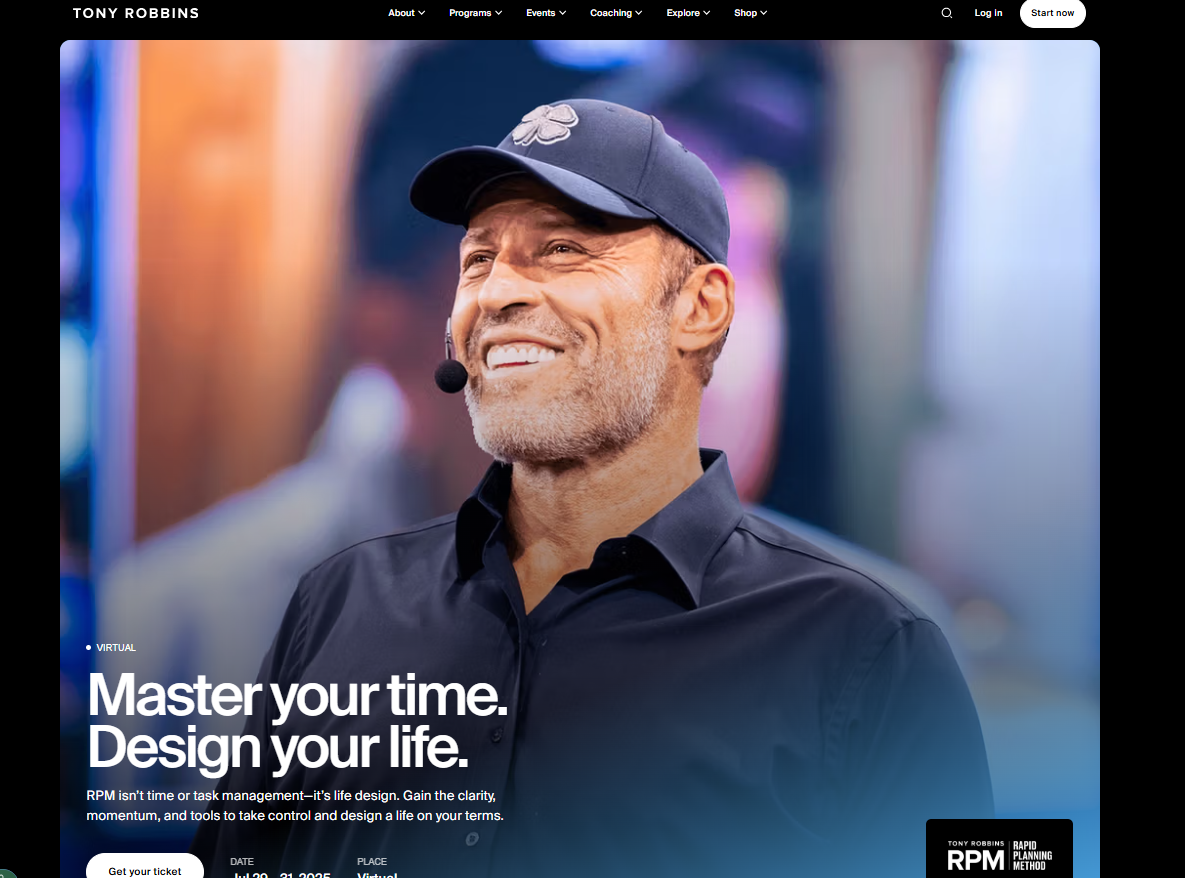
Tony Robbins – Rapid Planning Method (RPM) 2025
$4,000.00 Original price was: $4,000.00.$99.00Current price is: $99.00.
- 24/7 Contact Support & Telegram - Ecomkevin_1
- You Can Request Any Courses
- Original Courses HD Qualite and links updated
Guaranteed Safe Checkout


Description
In a world where distractions are constant and goals often remain unfinished, the ability to plan with clarity and emotional drive has become a true competitive advantage. One of the most powerful systems ever designed for this purpose comes from Tony Robbins, a global authority on personal development and peak performance. His proven framework has helped millions of people gain control over their time, emotions, and results by aligning purpose with massive action.
This in-depth guide explores the philosophy, structure, and practical application of the Tony Robbins – Rapid Planning Method (RPM) 2025, explaining why it continues to be one of the most effective goal-achievement systems in the modern era.
Understanding the Philosophy Behind RPM
Traditional planning focuses on to-do lists. RPM focuses on outcomes powered by emotion. The core idea is simple yet profound: people don’t act because of logic; they act because of emotional reasons. When your goals are emotionally compelling, execution becomes natural instead of forced.
Rather than asking, “What do I need to do today?”, this system encourages a more powerful question:
“What do I really want, and why must I achieve it?”
By shifting focus from tasks to purpose, RPM transforms planning into a motivation-driven process.
What Makes RPM Different From Traditional Goal Setting
Most planning systems fail for three reasons:
-
They lack emotional engagement
-
They focus on activity instead of results
-
They ignore identity-level change
RPM addresses all three gaps.
Outcome-Oriented Thinking
Instead of listing actions, RPM defines clear outcomes. Outcomes describe what success looks like, not what you’re busy doing.
Emotion as Fuel
The system forces you to define why achieving the goal is a must. This emotional leverage becomes the driving force behind consistent action.
Identity-Based Execution
RPM aligns goals with who you want to be, not just what you want to achieve. This is why results tend to stick long-term.
The Three Core Pillars of the Rapid Planning Method
1. Results (R)
Results define the specific outcome you want. These are measurable, clear, and time-bound. Instead of vague intentions, RPM demands precision.
Example:
-
Not: “I want to grow my business”
-
But: “I want to increase monthly revenue by 30% while working fewer hours”
Clarity eliminates confusion and procrastination.
2. Purpose (P)
Purpose is the emotional reason behind your goal. This step separates RPM from every other planning system.
You ask:
-
Why must I achieve this?
-
What pain will I avoid?
-
What pleasure will I gain?
-
How will this impact my identity and future?
When purpose is strong, excuses disappear.
3. Massive Action Plan (M)
Once results and purpose are defined, RPM shifts into execution mode.
This involves:
-
Identifying leverage actions
-
Eliminating low-value activities
-
Assigning ownership and deadlines
-
Tracking progress consistently
Action becomes intentional rather than reactive.
The RPM Planning Process Explained Step by Step
Step 1: Capture Everything
Start by writing down every goal, project, and responsibility across all life areas:
-
Business & career
-
Health & fitness
-
Relationships
-
Finances
-
Personal growth
This clears mental clutter and brings focus.
Step 2: Chunk Goals Into Outcomes
Large goals are broken into achievable outcomes. Each outcome must be realistic yet challenging.
This prevents overwhelm and encourages momentum.
Step 3: Define Emotional Drivers
For every outcome, clearly state why it matters emotionally. This step creates urgency and commitment.
Without emotion, goals remain optional.
Step 4: Design the Action Map
Now map out the most effective actions that will directly move you toward the result.
RPM emphasizes effectiveness over efficiency — doing the right things, not more things.
Step 5: Review and Optimize
Daily and weekly reviews ensure alignment. If actions are not producing results, the plan is adjusted without guilt or frustration.
Applying RPM in Different Areas of Life
Career and Business Growth
RPM helps professionals:
-
Prioritize high-impact work
-
Increase productivity without burnout
-
Align daily actions with long-term vision
Entrepreneurs often use it to scale businesses while maintaining balance.
Health and Fitness Transformation
By linking fitness goals to emotional reasons—such as confidence, energy, or longevity—RPM makes consistency easier.
The focus shifts from “working out” to becoming a high-energy individual.
Relationships and Personal Life
RPM can be applied to improve communication, deepen connections, and create intentional family time.
Instead of reacting, you design your relationships proactively.
Why RPM Is More Relevant Than Ever in 2025
Modern life is fast, noisy, and distraction-heavy. RPM works because it:
-
Cuts through information overload
-
Forces clarity and focus
-
Builds emotional resilience
-
Encourages intentional living
In 2025, success belongs to those who can manage their attention and energy—not just their time.
Common Mistakes People Make With RPM
Even powerful systems fail if applied incorrectly. Common errors include:
-
Skipping the emotional “why”
-
Setting too many outcomes at once
-
Confusing activity with progress
-
Not reviewing and refining plans regularly
RPM is a living system—it must be revisited and refined.
Long-Term Benefits of Mastering RPM
When practiced consistently, RPM leads to:
-
Higher productivity with less stress
-
Stronger emotional control
-
Faster decision-making
-
Clear life direction
-
Sustainable success without burnout
It doesn’t just help you achieve more—it helps you become more.
Final Thoughts
The true power of RPM lies in its simplicity combined with emotional depth. It’s not about doing more; it’s about doing what truly matters with absolute clarity and purpose. When goals are emotionally charged and strategically planned, results become inevitable.
For individuals seeking structure, motivation, and long-term fulfillment, the Tony Robbins – Rapid Planning Method (RPM) 2025 remains one of the most practical and transformational planning frameworks available today.
Reviews
There are no reviews yet.